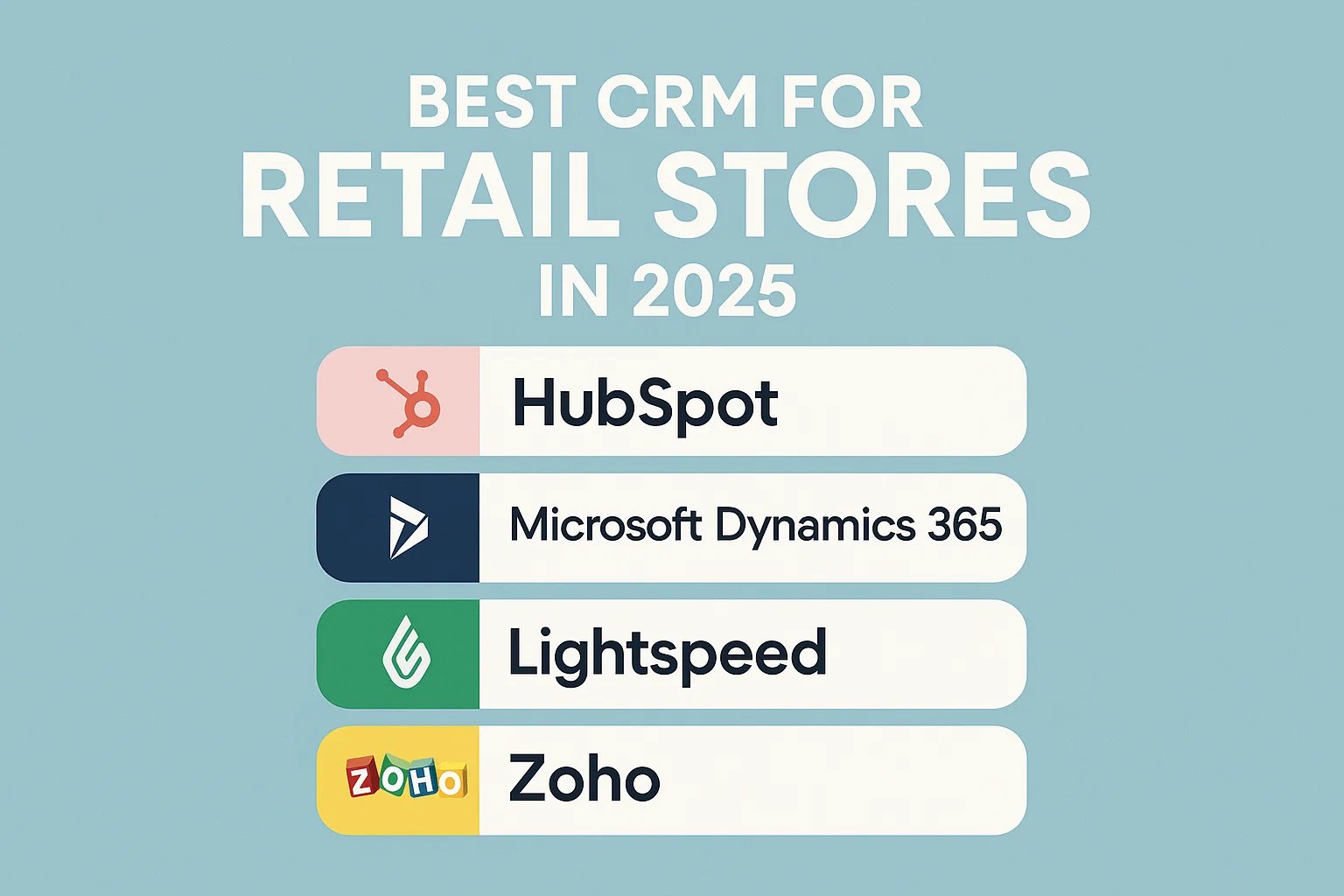
Retail businesses in 2026 face ever-increasing competition and changing customer expectations. From personalized marketing to inventory management, a robust CRM (Customer Relationship Management) system can streamline store operations, improve customer relationships, and increase sales revenue.
Why Retail Stores Need a CRM
CRMs are no longer just sales tools; they are essential platforms for managing all aspects of a retail business. Key reasons retail stores need a CRM include:
- Centralized customer data for personalized marketing campaigns
- Tracking purchase history to understand buying patterns
- Managing loyalty programs and customer engagement
- Automating communications and promotions across multiple channels
- Integrating with POS and inventory management systems
Key Features of a Retail CRM
- Customer Profile Management: Store customer preferences, history, and engagement details.
- Loyalty & Rewards Programs: Automate points, discounts, and personalized promotions.
- Marketing Automation: Email, SMS, push notifications, and customer segmentation.
- Sales Tracking & Analytics: Monitor revenue trends and customer insights.
- Inventory Integration: Sync CRM with POS and stock management systems.
- Omnichannel Engagement: Connect online, mobile, and in-store experiences.
| CRM | Best For | Key Features | Pricing |
|---|---|---|---|
| Salesforce Retail CRM | Large retail chains | Customer profiles, omnichannel engagement, marketing automation, inventory integration | From $25/user/month |
| Zoho CRM | Small to medium retail stores | Customer management, loyalty programs, email marketing, analytics dashboards | Free plan available, paid from $12/user/month |
| HubSpot CRM | Retail startups & boutiques | Contact management, marketing automation, pipeline tracking, analytics | Free plan available, paid plans from $50/month |
| Pipedrive | Sales-focused retail teams | Sales pipelines, task automation, mobile access, reporting dashboards | From $14/user/month |
| Freshsales | AI-driven retail insights | AI recommendations, segmentation, workflow automation | From $15/user/month |
Benefits of Using a CRM in Retail
- Improved customer loyalty through personalized shopping experiences
- Increased revenue from targeted promotions and campaigns
- Streamlined store operations and inventory coordination
- Real-time insights for smarter decision-making
- Consistent communication across online and offline channels
Best Practices for Retail CRM Implementation
- Define clear sales and marketing workflows before adoption
- Segment customers for personalized promotions
- Integrate CRM with POS, inventory, and eCommerce platforms
- Automate loyalty programs and engagement campaigns
- Train store staff for smooth CRM usage
- Continuously analyze CRM data to optimize performance
Future Trends for Retail CRMs in 2026
- AI & Predictive Analytics: Forecast buying behavior and optimize inventory.
- Omnichannel Retailing: Seamless in-store and online experiences.
- Voice & Chatbot Support: Instant assistance for shoppers.
- Mobile-First CRM Access: Real-time insights for store teams.
- Advanced Loyalty Automation: Personalized rewards driving repeat purchases.
Conclusion
For retail businesses in 2026, a CRM is a strategic necessity. From boosting loyalty to optimizing operations and increasing sales, the right CRM helps retailers stay competitive in a rapidly evolving marketplace. Investing in a scalable, AI-enabled CRM ensures long-term growth and superior customer experiences.
Frequently Asked Questions (FAQs)
1. Is a CRM suitable for small retail stores?
Yes. Affordable CRMs like Zoho, HubSpot, and Pipedrive are ideal for small retailers.
2. Can a CRM integrate with POS and inventory systems?
Modern CRMs provide seamless integrations with POS, inventory, and eCommerce platforms.
3. How does a CRM improve customer loyalty?
By storing customer preferences, automating rewards, and delivering personalized promotions.
4. Can retail staff access CRM data on mobile?
Yes, mobile CRM apps allow access to customer and sales data anytime, anywhere.
5. Which CRM is best for retail chains?
Salesforce Retail CRM is ideal for large chains due to scalability and advanced integrations.